Artificial Intelligence is Only as Good as the Data Behind It: Dairy Farming Shows Why
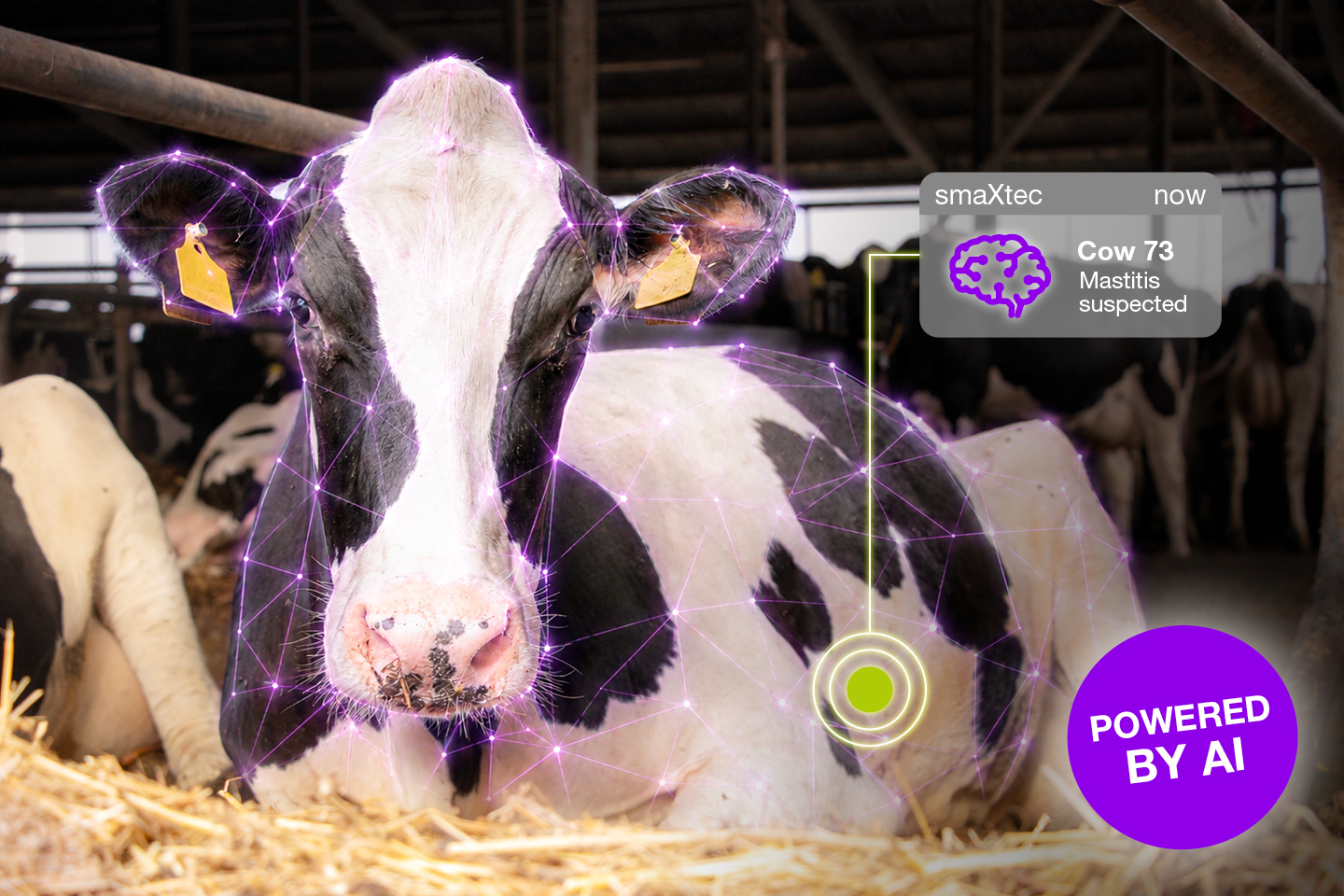
smaXtec highlights why reliable health data and earlier decision-making are becoming increasingly important in modern milk production.
[Madison, Wis., June 16, 2026] — Artificial intelligence is becoming most relevant where it improves the quality and timing of operational decisions. In dairy farming, those gains are becoming increasingly measurable.
Modern dairy operations are larger, more specialized and more complex to manage than ever before. Decisions around animal health, reproduction, feeding and labor increasingly need to be made earlier to reduce losses and improve performance. At the same time, producers face mounting pressure to improve efficiency, maintain animal health standards and operate in a volatile cost environment.
In that context, the business value of artificial intelligence depends on one factor above all: the quality of the underlying data.
“Artificial intelligence becomes valuable in dairy farming when it improves the timing and quality of decisions,” said Charlie Sheppy, CEO of smaXtec. “With reliable health data and relevant information delivered at the right time, farms can identify relevant changes earlier, focus attention where it matters most and create better outcomes for animals, teams and the business.”
smaXtec’s approach is built on continuously measured health data from inside the cow. Unlike systems that rely primarily on external observations, this approach is based on biological data measured directly within the animal, providing a different foundation for decision-making.
Earlier detection of health issues can influence treatment costs, labor efficiency, milk yield stability and long-term herd performance. According to smaXtec, its system is designed to support earlier detection of conditions such as mastitis and milk fever, helping farmers intervene before clinical symptoms become visible.
smaXtec sees artificial intelligence as part of a broader decision infrastructure on farm, helping teams make more timely and informed decisions.
The relevance extends beyond agriculture. Dairy farming offers a practical example of how artificial intelligence creates value in asset-intensive sectors through measurable operational improvement. Data quality and practical adoption ultimately determine whether these systems become business tools or simply another layer of software.
As artificial intelligence becomes more widely adopted across industries, dairy farming offers a useful reminder: the value of intelligence depends on the quality of the information it is built on. In milk production, that value starts with the cow, the data and the people responsible for making the right decision at the right time.
Key Facts
-smaXtec is an internationally operating dairy technology company headquartered in Graz, Austria.
-The company pioneered continuous health monitoring based on data measured directly from inside the cow.
-smaXtec draws on one of the world's largest continuously measured biological datasets in dairy farming.
-Its technology provides access to biological health signals that are not visible through external observation alone.
-AI-supported analysis translates millions of health data points into actionable recommendations for earlier and more targeted decision-making.
-By combining proprietary sensor technology, artificial intelligence and preventive health management, smaXtec helps dairy producers make earlier, more targeted decisions that improve animal health, operational efficiency and long-term farm performance.
-smaXtec's approach supports a shift from reactive herd management towards preventive, data-driven health management.
About smaXtec
smaXtec is the global leader in dairy cow health monitoring, providing farmers with precise, continuous in-cow data to optimize herd health, productivity and sustainability. With its patented sensor technology and AI-driven analytics, smaXtec enables early health detection, improved reproductive management and data-based decision-making for modern dairy operations worldwide.